Frequently Asked Questions

Find Answers to Your Questions

Common questions about forex brokers, regulation, trading platforms, and how we verify brokers.

Yes. Our editorial team is independent from our commercial team. Brokers cannot pay to influence their ratings or rankings. We assess each broker on over 100 objective data points including regulation, spreads, execution speed, platform quality, and withdrawal reliability. Sponsored placements, where they exist, are clearly labeled as advertising disclosures.

We earn revenue through affiliate commissions — when you click a link to a broker and open an account, we may receive a fee from that broker. This does not affect our ratings or editorial opinions. Our advertising disclosure page explains this fully. We only list brokers that pass our verification standards regardless of whether they have an affiliate agreement with us.

Visit our Compare Brokers page and select up to 5 brokers from the dropdown list. The tool will display a side-by-side table of spreads, leverage, minimum deposit, regulation, platforms supported, and more. You can also use our Broker Match quiz to get personalized recommendations based on your trading experience, preferred markets, and account size.

Yes. Forex Brokers Verified is served over HTTPS with TLS encryption. We do not store payment information of any kind. Any email addresses collected via our contact or newsletter forms are handled in accordance with our Privacy Policy and GDPR requirements. We do not sell personal data to third parties.

Yes — but our recommendations are based entirely on data-driven analysis, not paid placements. Our top-rated brokers consistently score highly on regulation strength (FCA, ASIC, CySEC), spread competitiveness, platform reliability, and verified withdrawal speed. Our Best Forex Brokers list is updated quarterly to reflect the latest data.

Red flags for broker scams include: unregulated or offshore-only licensing (e.g., St. Vincent & the Grenadines), pressure tactics to deposit more money, guaranteed profit claims, difficulty withdrawing funds, lack of verifiable contact information, and suspiciously wide spreads. Use our Scam Broker Shield tool to verify any broker before depositing. Always confirm the broker's license number directly on the regulator's official registry.

For beginners in 2026, we recommend brokers that offer a demo account, educational resources, low minimum deposits (under $100), and simple platforms like MT4 or web-based trading. IC Markets, Pepperstone, and XM consistently rank among the best for new traders due to their tight spreads, strong regulation, and beginner-friendly onboarding.

Regulation means a government financial authority (such as the FCA in the UK, ASIC in Australia, or CySEC in Cyprus) has licensed and oversees the broker. Regulated brokers must maintain segregated client funds, meet capital requirements, submit to regular audits, and provide negative balance protection. Trading with an unregulated broker puts your funds at significant risk of loss or fraud.

Minimum deposits vary widely by broker. Many regulated brokers allow you to start with as little as $10–$100 (e.g., XM starts at $5, Exness has no minimum). However, a practical starting balance for meaningful trading is at least $500–$1,000 to allow proper position sizing and risk management. Starting too small often leads to over-leveraging.

ECN (Electronic Communication Network) brokers connect you directly to liquidity providers — banks, hedge funds, and other traders — offering raw spreads from 0.0 pips and charging a commission per trade. Market makers create their own internal market, often offering no-commission accounts with wider built-in spreads. For high-volume traders, ECN is typically cheaper. For casual traders, market makers can offer simpler pricing.

A reputable forex broker should process withdrawal requests within 1–3 business days for standard bank wires, and within 24 hours for e-wallet methods (Skrill, Neteller, PayPal). If a broker consistently delays withdrawals beyond 5 business days without a clear reason, that is a major red flag. Brokers like Exness and Pepperstone are known for same-day or instant withdrawal processing.

Leverage availability depends on your jurisdiction and broker. In the EU (ESMA regulations), retail clients are capped at 30:1 for major forex pairs. In Australia (ASIC), the cap is also 30:1. Outside these jurisdictions — such as offshore or non-EU entities — leverage can reach 500:1 or higher. Higher leverage amplifies both gains and losses. We recommend using leverage conservatively regardless of what is available.

A CFD (Contract for Difference) is a derivative product that lets you speculate on the price movement of an asset — including currencies, indices, commodities, and stocks — without owning the underlying asset. Forex trading specifically refers to trading currency pairs. CFDs are broader; many forex brokers also offer CFDs on thousands of instruments. Both involve leverage and carry significant risk.

CFD availability depends on your country of residence. CFDs are restricted or banned in the United States, as US residents must use CFTC/NFA regulated futures or spot forex brokers. In the EU, ESMA imposes leverage caps on CFDs (30:1 for major forex pairs). In Australia, ASIC regulations apply. Always confirm your local legal status and use a broker regulated in a jurisdiction that covers your country.

Overnight swap (or rollover) fees are charged when you hold a leveraged CFD position open past 5pm EST (the New York close). The fee is based on the interest rate differential between the two currencies in a pair (for forex CFDs) or the broker's financing rate (for stock/index CFDs). Swap-free (Islamic) accounts are available at most brokers for traders who cannot pay or receive interest for religious reasons.

Negative balance protection (NBP) means the broker guarantees you cannot lose more than you deposit, even during extreme market volatility. This is mandatory for retail clients under ESMA (EU) and ASIC (Australia) regulations. Without NBP, a large gap move could result in your account going negative and the broker pursuing you for the deficit. Always verify whether your broker offers NBP for your account type.

Tax treatment of CFD profits varies by country. In the UK, CFD gains are subject to Capital Gains Tax (CGT). In Australia, they are treated as ordinary income. In many other countries, trading profits are taxed as income or capital gains. We strongly recommend consulting a qualified tax advisor in your country, as tax laws for trading income change frequently and vary significantly.

For raw ECN spreads on CFDs, IC Markets (Raw account), Pepperstone (Razor account), and BlackBull Markets consistently offer some of the lowest spreads in the industry — often from 0.0 pips on EUR/USD during peak liquidity hours. For commission-free accounts with wider spreads, XM and Exness offer competitive Standard accounts. Compare current spreads using our broker comparison tool.

Many multi-asset forex brokers now offer crypto CFDs, allowing you to trade Bitcoin, Ethereum, and other major cryptocurrencies. Top options include Eightcap (crypto-native with 100+ crypto pairs), IC Markets, and Pepperstone. Note that crypto CFDs are different from buying actual cryptocurrency — you don't own the underlying coin and you trade on margin. Check our Crypto Brokers page for verified options.

Yes, a growing number of brokers accept crypto deposits (Bitcoin, USDT, Ethereum) for instant funding with no bank transfer delays. Brokers like Eightcap, PrimeXBT, and some Exness account types accept crypto. Always verify the deposit method on the broker's official website, as availability varies by country and account type.

Cryptocurrencies are significantly more volatile than major forex pairs. Bitcoin can move 10–20% in a single day, while EUR/USD typically moves less than 1%. This means profit potential is higher, but so is the risk of rapid losses — especially when using leverage. If you are new to trading, we recommend practicing on a demo account and starting with major forex pairs before trading volatile cryptocurrencies.

With crypto CFDs at a forex broker, you speculate on price movements without owning the underlying coin. You cannot withdraw, transfer, or use the actual cryptocurrency — you simply profit or lose based on price change. Buying actual crypto via an exchange (Coinbase, Binance) means you own the digital asset and can transfer it to a wallet. CFDs are more suitable for short-term trading with leverage; spot crypto purchases are better for long-term holding.

In most countries, yes — cryptocurrency profits are taxable. In the UK, HMRC treats crypto gains as capital gains. In the US, the IRS treats crypto as property, making each trade a taxable event. In Australia, the ATO taxes crypto gains as income or capital gains depending on the nature of the activity. Tax reporting requirements for crypto are evolving rapidly; always consult a tax professional familiar with digital assets in your jurisdiction.

Spot forex involves buying or selling a currency pair at the current market price for immediate settlement (typically T+2). Futures are standardized contracts to buy or sell a currency at a predetermined price on a future date, traded on regulated exchanges like the CME. Futures have fixed contract sizes and expiry dates. Most retail forex brokers offer spot trading; dedicated futures brokers are needed for exchange-traded futures contracts.

Forex futures are traded on centralized exchanges (CME Group), offering greater transparency, standardized contract sizes, and no broker dealing desk conflicts. There are no rollover/swap fees since the rate is built into the futures price. However, futures require larger capital (standard contracts are often $100,000+ notional), have specific expiry dates, and are less accessible to retail traders than spot forex via a standard broker account.

Standard futures contracts require significant margin — often $2,000–$10,000 per contract. Micro futures contracts (available on CME) allow entry with much less capital, sometimes $500–$1,000 per contract. Futures brokers like Interactive Brokers, NinjaTrader, and Tradovate cater to retail futures traders with competitive commissions and access to micro contracts.

When a futures contract expires, it is either cash-settled (the profit/loss is credited to your account in cash) or physically settled (you deliver or receive the underlying asset). Currency futures are typically cash-settled. If you want to maintain your position, you "roll over" to the next contract before expiry. Most retail traders close or roll their positions well before the expiry date.

Some multi-asset brokers like Interactive Brokers and Saxo Bank offer both spot forex and exchange-traded futures in the same account. Most retail-focused forex brokers only offer spot forex and CFDs. If you need access to both, look for brokers with direct market access (DMA) and futures brokerage capabilities, which typically require larger account balances and more regulatory compliance.

Rebate programs return a portion of the spread or commission you pay on each trade back to you as cashback. For example, if a broker charges 0.5 pips spread and offers a 0.1 pip rebate, your effective cost is 0.4 pips. This adds up significantly for active traders. Check our Rebate Calculator and our Low Cost Brokers section to find brokers with the best fee structures.

The true cost of a trade includes: spread (buy/sell price difference), commission (per lot, if applicable), swap fees (for overnight positions), and any deposit/withdrawal fees. Use our Pip Value Calculator and Profit/Loss Calculator to estimate trading costs across different brokers. Our broker comparison table also shows all-in cost estimates per standard lot.

Zero-commission accounts bundle the broker's fee into a wider spread rather than a per-trade commission. XM Standard, Exness Standard, and FXTM Advantage-MT5 are popular commission-free options. These are ideal for lower-volume traders who prefer simple pricing without per-lot charges. High-volume traders usually find raw spread + commission accounts (like IC Markets Raw or Pepperstone Razor) cheaper overall.

Deposit bonuses should be approached with caution. In the EU, ESMA regulations prohibit brokers from offering deposit bonuses to retail clients. Outside the EU, bonuses are common but often come with high volume requirements before you can withdraw bonus funds or profits generated from them. Always read the full terms and conditions. A broker with excellent execution and tight spreads is generally more valuable than one offering large bonuses with restrictive terms.

Many brokers offer volume-based discounts or VIP tiers for high-volume traders. Once you trade a certain number of lots per month (e.g., 100+ standard lots), you may qualify for reduced spreads, lower commissions, dedicated account managers, and priority withdrawals. Brokers like Pepperstone, IC Markets, and Vantage Markets have well-defined active trader programs. Contact the broker's institutional desk if you trade significant volume.

Hear What Our Clients Have to Say

Welcome to our testimonials section, where you can discover what our satisfied clients have to say...

2.7K

Here are some testimonials from our valued clients

“I was skeptical about using a brokerage comparison service at first. The comparison tools are comprehensive and easy to use.”

Courtney Henry

Project Manager

“I was skeptical about using a brokerage comparison service at first. The comparison tools are comprehensive and easy to use.”

Courtney Henry

Project Manager

“I was skeptical about using a brokerage comparison service at first. The comparison tools are comprehensive and easy to use.”

Courtney Henry

Project Manager

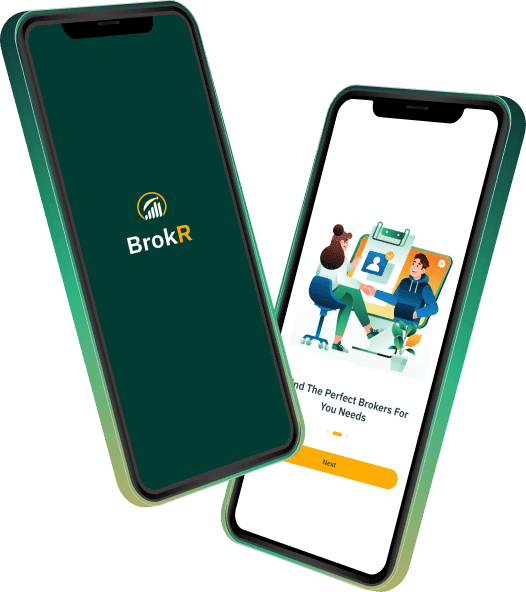
Get Download Our Apps

Take advantage of our convenient mobile apps to access our services anytime, anywhere. Download our apps today.

Active Users

20M

  • User-Friendly Interface

  • Secure and Reliable

  • Sync Across Devices