




When retail traders compare forex brokers, they almost always focus on superficial numbers: "Broker A offers 1:30 leverage, but Broker B in the Seychelles offers 1:1000 leverage and a 50% deposit bonus!"
Lured by high leverage, many traders deposit thousands of dollars into offshore entities without ever asking the single most critical question in financial trading:
"What happens to my money if this broker goes bankrupt tomorrow?"
In the retail forex sector, broker insolvencies are not hypothetical disasters. From the Swiss Franc flash crash to recent offshore collapses, undercapitalized brokers disappear regularly.
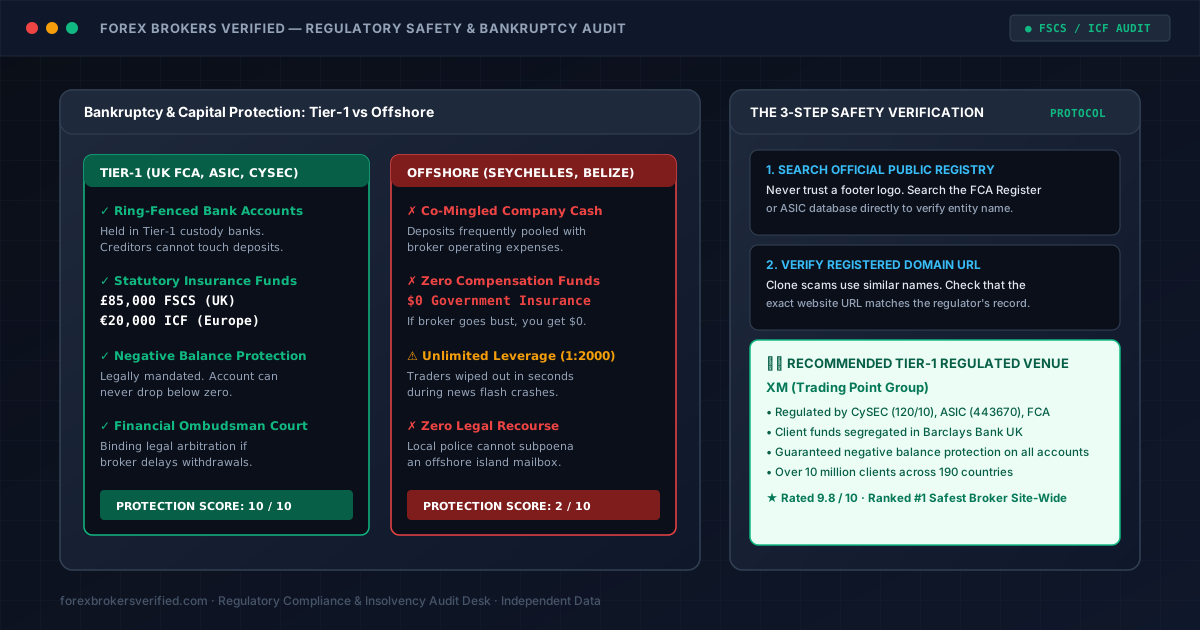
Here is an institutional audit comparing Tier-1 regulatory protection (UK FCA, ASIC, CySEC) against offshore licenses (Seychelles, Vanuatu, Belize), explaining segregated bank accounts, statutory compensation schemes, and how to verify that your capital is legally protected.
1. The Legal Reality: Segregated Trust Accounts vs. Co-Mingling
When you wire funds to a forex broker, where does that cash actually go?
Tier-1 Regulated Brokers (FCA, ASIC, CySEC)
Under Tier-1 regulations, brokers are legally mandated to maintain Ring-Fenced Segregated Client Accounts at major global institutions (such as Barclays, HSBC, or National Australia Bank):
- Your deposit is legally recognized as your personal property held in trust.
- The broker is prohibited by law from using client funds to pay operational expenses, staff salaries, marketing campaigns, or hedge trading risks.
- If a Tier-1 regulated broker files for bankruptcy, corporate creditors cannot touch your segregated trading capital. The liquidator must return your balance in full.
Offshore Brokers (Seychelles, Vanuatu, Belize, St. Vincent)
In offshore jurisdictions, financial oversight is minimal:
- Many offshore brokers co-mingle client deposits directly with corporate operational accounts.
- Your money is often used to fund company cash flow or opposite B-book positions.
- If the offshore entity collapses, you are treated as an unsecured creditor. Your funds are absorbed into the bankruptcy estate, and you will almost certainly recover $0.00.
2. Statutory Investor Compensation Schemes Compared
If an offshore broker goes bankrupt or refuses to process your withdrawal, no foreign government will step in to wire your money back.
In contrast, Tier-1 regulatory jurisdictions back their regulated brokers with government-mandated statutory insurance schemes:
| Jurisdiction & Regulator | Statutory Insurance Coverage | Ring-Fenced Custody | Negative Balance Protection? | Legal Dispute Arbitration |
|---|---|---|---|---|
| UK (FCA) | £85,000 per client (via FSCS) | Barclays / NatWest | Yes (Mandatory) | Financial Ombudsman Service |
| Europe (CySEC / BaFin) | €20,000 per client (via ICF) | Eurobank / Tier-1 EU | Yes (Mandatory) | CySEC Financial Ombudsman |
| Australia (ASIC) | Managed via Client Trust Money Rules | NAB / Commonwealth Bank | Yes (Mandatory) | AFCA (Australian Authority) |
| Seychelles (FSA) | $0.00 (Zero Insurance) | Co-Mingling Permitted | No Guarantee | Offshore Island Court Only |
| Vanuatu (VFSC) | $0.00 (Zero Insurance) | Co-Mingling Permitted | No Guarantee | None |
| St. Vincent (SVG FSA) | $0.00 (Does not regulate FX) | Unregulated | No Guarantee | None |
The St. Vincent Warning: The St. Vincent and the Grenadines FSA has repeatedly published official circulars warning that they do not license, monitor, or regulate retail forex trading. An SVG registration is merely a company incorporation certificate—it provides zero financial oversight!
3. Negative Balance Protection: Can You Owe Your Broker Money?
During black swan geopolitical events (such as unexpected central bank rate shifts or flash crashes), markets can gap hundreds of pips past stop-loss orders in milliseconds.
- Under Tier-1 Oversight: Regulators legally force brokers to provide Guaranteed Negative Balance Protection. If a flash crash pushes your balance into negative territory, the broker must absorb the loss and reset your account to zero. You can never lose more than your initial deposit.
- Under Offshore Regimes: If a market gap causes your account to go -$15,000, the broker’s terms of service legally obligate you to wire fresh capital to pay off that debt!
4. The Safest Tier-1 Regulated Benchmark: XM
If you want the flexibility of global markets combined with the legal security of multi-jurisdictional regulation, XM represents our #1 verified benchmark:
- Multi-Regulated Authority: Holds licenses with CySEC (120/10), ASIC (443670), and the UK FCA.
- Segregated Tier-1 Custody: Client deposits are held in ring-fenced accounts at Barclays Bank UK and leading European banking partners.
- Guaranteed Protections: Full negative balance protection across every account tier, with over 10 million registered clients and a verified 15-year operating track record.
5. Summary Checklist Before Funding an Account
- Never Trust a Website Footer: Scam clone brokers copy regulator license numbers from legitimate firms. Always search the official register directly on fca.org.uk or asic.gov.au.
- Confirm URL Matches the Register: Check that the regulator's official register lists the exact web domain you are browsing.
- Understand the Leverage Trade-Off: 1:1000 offshore leverage is not a benefit if it comes at the expense of £85,000 deposit insurance.
- Use Our Regulatory Filter: Browse 100% verified Tier-1 brokers using our Top-Tier Regulated Broker Hub.